Built From Experience. Driven By Opportunity.
The EPF Player Development Model has not been created because we believe there is one perfect way to develop a footballer.
It has been created from decades of experience — playing, coaching, competing, leading and working with young people, and from seeing first-hand what can help a talented young player progress.
It has also been shaped by our own journeys.
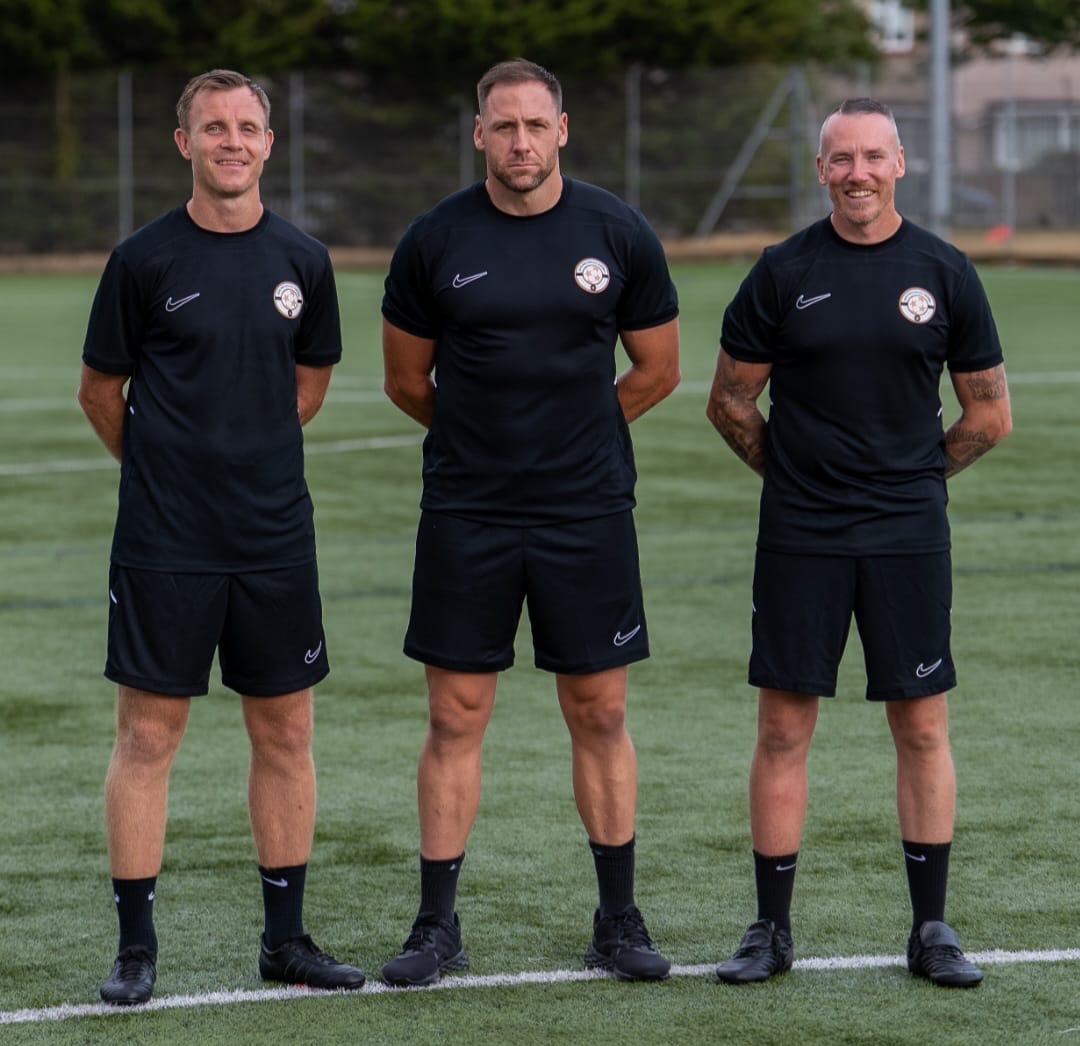
Elite ProFormance Football is led by three Directors:
Tony Craig, Alex Warner and Terry Hawkey.
Between them, they bring decades of experience across professional football, youth and grassroots coaching, technical development, physical performance, competitive sport and leadership.
But there is another part of their story that is equally important to what EPF wants to become.
All three Directors grew up on council estates.
None of them believes that a child’s postcode, family circumstances or financial background should determine the quality of coaching, support or opportunity available to them.
Football gave each of our Directors opportunities, experiences, friendships and careers that have influenced their lives.
Now they want to give something back.
EPF therefore isn’t simply about producing talented footballers.
We want to create opportunities for the next generation.
We want an environment where players from different backgrounds can train together, learn together and be judged on their attitude, potential and willingness to develop.
Talent exists everywhere. Opportunity doesn’t always.
We want EPF to help close that gap.
The Experience Behind EPF
Although our Directors share the same overall philosophy, each brings a very different journey and perspective to player development.
That diversity of experience is deliberate.
Developing a young footballer requires much more than simply knowing how to coach a passing drill.
It requires an understanding of the game, the developing athlete, the individual and the environment around them.
Tony Craig — Understanding What the Professional Game Really Demands
EPF Director Tony Craig brings something extremely valuable to our environment: extensive first-hand experience of professional football.
With more than 800 senior professional appearances, Tony has experienced the realities of the game over an exceptionally long playing career.
That means understanding much more than what happens during 90 minutes on a Saturday.
Professional football requires consistency.
Preparation.
Resilience.
Physical robustness.
Tactical discipline.
Competition.
Recovery.
Leadership.
Professional standards.
And the ability to continually perform when your place in the team and your livelihood can depend upon it.
That experience influences the EPF model.
When we work with a talented young player, we don’t simply ask whether they can perform a skill during an isolated practice.
We want to progressively develop players capable of recognising situations, making decisions and executing skills within the chaos and pressure of football.
Tony’s experience allows our coaches and players to continually connect development with an important question:
What does the game eventually demand?
Because there can be a significant difference between looking like a talented player and developing the attributes required to perform consistently at increasingly demanding levels.
Alex Warner — More Than Two Decades Developing Young Players
EPF Director Alex Warner brings more than two decades of football coaching experience and extensive experience working with young players.
Alex founded AW Football Coaching, which became particularly recognised for its toddler football programme and its work introducing young children to the game.
That background has had a major influence on how we view the beginning of the EPF pathway.
We don’t believe player development starts when someone identifies a talented nine-year-old.
It can begin years earlier.
For a two, three or four-year-old, football should be exciting.
It should involve movement.
Exploration.
Coordination.
The football.
Imagination.
Interaction.
And plenty of smiles.
At that age, our biggest achievement isn’t producing a technically perfect footballer.
It is creating a child who cannot wait to play again.
Those early positive experiences can provide foundations for everything that follows.
As players grow, coaching naturally evolves.
Movement becomes increasingly football-specific.
Basic interactions with the ball develop into technical proficiency.
Technical proficiency must eventually survive pressure.
Players begin scanning, recognising space, understanding opponents and solving increasingly difficult football problems.
Alex’s experience gives EPF a valuable perspective across that journey — from introducing a child to their first football environment through to developing increasingly accomplished young players.
Terry Hawkey — Football, Performance, Competition and Leadership
EPF Director Terry Hawkey brings another combination of experiences to the programme.
Terry has more than two decades of football coaching experience, working across youth development, academy, grassroots and senior football environments.
Alongside football, Terry has a substantial background in competitive athletics and physical performance.
As a junior athlete, Terry competed at international level and shared competition environments with athletes who would go on to achieve success at the very highest levels of world sport, including Olympic champion Sir Mo Farah.
More than two decades later, Terry continues to compete.
His competitive interests range from sprint events such as the 100m through to middle-distance running, marathon running and throwing events including the shot put.
That breadth of experience has helped shape an important part of Terry’s coaching philosophy:
Athletic development is a process, not a quick fix.
Speed takes development.
Strength takes development.
Movement takes development.
Fitness takes development.
And performance requires consistency.
Terry combines this sporting background with specialist knowledge and experience within strength and conditioning and physical performance, allowing EPF to consider not only how players use the football but how their developing bodies enable them to perform.
But there is another significant influence on Terry’s approach to coaching and leadership.
Terry is a serving operational officer within the London Fire Brigade, with more than 20 years of service.
Working within an emergency service brings a very different perspective on leadership, teamwork, communication, preparation, responsibility and standards. In that environment, individuals have responsibilities to the people around them.
Teams must communicate.
Standards matter.
Preparation matters.
And people must be capable of remaining composed and making decisions under pressure.
Those experiences naturally influence Terry’s approach to coaching.
We want EPF players who are confident individuals, but who also understand responsibility.
Players who work for teammates.
Players who communicate.
Players who respond positively to challenges.
Players who understand standards.
And players who are prepared to work consistently towards something they want to achieve.
Why These Experiences Matter
EPF is not Tony Craig’s programme.
It isn’t Alex Warner’s programme.
And it isn’t Terry Hawkey’s programme.
It is the combination of those experiences that matters.
Tony brings the reality of professional football.
Alex brings decades of technical and youth player development, including understanding where a child’s relationship with football can begin.
Terry brings decades of football coaching alongside competitive sport, physical-performance expertise and leadership experience.
Three different journeys.
Three different perspectives.
One shared purpose:
Creating the best development environment we can for the player standing in front of us.
That is why our Player Development Model isn’t built around one coaching methodology.
It brings together technical development, tactical understanding, physical preparation, psychological development, character and individual support.
Because footballers are not simply collections of technical skills.
They are developing young people.
Why We Created This Programme
All three EPF Directors have spent significant parts of their lives around football.
And across those years, we have seen outstanding coaching.
We have seen inspirational coaches.
We have seen players given opportunities that changed their lives.
But we have also seen the other side.
Talented players overlooked.
Players developing later than their peers.
Children losing confidence.
Parents confused about what their child actually needs.
Players accumulating huge amounts of training without a clear development plan.
Children believing that being released from an academy means their opportunity has disappeared.
And families feeling that accessing additional high-quality development increasingly depends upon how much they can afford.
Those experiences have influenced what we want EPF to become.
We want to do things differently.
Opportunity Should Not Depend on Background
EPF wants to deliver a premium player-development environment.
But premium should describe the quality of the programme — not the background of the family accessing it.
That distinction matters enormously to us.
All three Directors understand what it means to grow up without unlimited resources.
That is why accessibility will remain part of the EPF philosophy as the organisation grows.
We want players from different communities, schools, grassroots clubs and financial backgrounds within our environment.
We want to create routes into EPF.
We want to work with schools and grassroots clubs.
We want to identify talent.
We want to create opportunities.
And as EPF grows, we want to explore further ways of supporting talented and committed young players who might otherwise struggle to access additional development opportunities.
Because potential doesn’t recognise postcode.
Neither should opportunity.
Developing Players — Not Selling Dreams
There is another principle that matters to us.
We will never promise parents that EPF will turn their child into a professional footballer.
Nobody can honestly make that promise.
Professional football is extraordinarily competitive.
Our responsibility is different.
We want to help players maximise whatever potential they possess.
For some, that journey may lead towards academy football.
For others, strong grassroots or non-league football.
Some may eventually reach the professional game.
Others may simply become significantly better footballers while developing confidence, friendships, discipline and a lifelong relationship with sport.
All of those journeys have value.
Our responsibility is to provide the coaching, challenge, environment and support.
The player’s responsibility is to bring their attitude, effort and willingness to learn.
Then we see where the journey can go.
More Than Three Directors
While our Directors provide the philosophy and leadership behind EPF, a high-quality player-development environment cannot depend entirely on three people.
The EPF coaching team is fundamental to the programme.
We want coaches who understand our philosophy but are also confident enough to bring their own knowledge, personality and experience.
As EPF grows, coach development will therefore sit alongside player development.
We want our coaches learning.
Sharing ideas.
Observing each other.
Challenging practices.
Understanding individual players.
And continually developing their knowledge of the modern game.
Because there is a simple principle behind this:
Better coaches create better environments. Better environments give players a better chance to develop.
Building Expertise Around the Player
We also recognise that football coaches cannot — and should not — attempt to be experts in everything.
The modern player requires support across multiple areas.
That is why we want to progressively build a network of specialists around EPF.
Alongside our football and physical-performance expertise, we will be linking with a mind coach to provide additional support around confidence, resilience, pressure, preparation and performance mindset.
We will also work alongside One Body London for professional advice and support around injury management, rehabilitation and injury-prevention considerations.
As EPF develops further, we want to continue building relationships with appropriate specialists who can contribute to areas that genuinely benefit our players.
Our long-term vision is straightforward:
Put the player in the middle and build the right people around them.
What We Want EPF to Represent
We want EPF to become recognised for excellent football coaching.
But we want the name to represent more than that.
We want parents to associate EPF with:
Quality.
Opportunity.
Development.
Standards.
Integrity.
Expertise.
Community.
And above everything:
People who genuinely care about developing young players.
We will not get everything right.
Our programme will continue to evolve as football, coaching and sports science evolve.
But that is exactly what we expect from our players.
Learn.
Reflect.
Adapt.
Improve.
So we must demand the same from ourselves.
Tony Craig, Alex Warner and Terry Hawkey have taken different journeys through football, sport and life.
Those journeys eventually brought them together at Elite ProFormance Football.
Now the objective is to use those experiences to help create opportunities for the next generation.
From the toddler taking their first kick.
To the talented young player searching for their next challenge.
To the player preparing for an academy opportunity.
Different starting points. Different journeys. One commitment to development.
Elite ProFormance Football
Develop the Player. Support the Person. Create the Opportunity.



Comments