Why Toddler Sports Matter: The Benefits of Starting Sport at Ages 2–4
Building Movement, Confidence and a Love of Sport — Without Rushing Childhood
At two, three or four years old, nobody knows which child will become the best footballer.
Nobody knows who will become the fastest runner.
Nobody knows who will still be playing sport at sixteen.
And nobody can accurately predict which young child will eventually compete at a high level.
That is important to understand from the beginning.
At Elite ProFormance Football, we believe introducing children to sport early can provide enormous benefits.
But the purpose of toddler sport should not be to manufacture elite athletes at the age of three.
It should be to help children:
Move.
Explore.
Play.
Build confidence.
Interact with others.
Learn.
And, most importantly:
Enjoy being active.
That is where genuine long-term development can begin.
Should a Two-Year-Old Really Be Doing Sports Coaching?
Yes — if the environment is appropriate.
The words “sports coaching” can sometimes create the wrong image.
A toddler session should not look like an adult training session.
We should not expect two-year-olds to stand in lines listening to long instructions.
We should not expect tactical understanding.
We should not demand perfect technique.
And we certainly should not place pressure on children to perform.
Good toddler coaching should look much closer to guided play.
Running.
Jumping.
Balancing.
Climbing.
Throwing.
Catching.
Kicking.
Changing direction.
Following simple instructions.
Exploring equipment.
Playing games.
Interacting with other children.
Learning through movement.
The UK Chief Medical Officers recommend that children aged 1–5 accumulate at least 180 minutes of physical activity throughout the day, with active play forming an important part of that recommendation.
The World Health Organization also identifies early childhood as a period of rapid physical and cognitive development and encourages varied physical activity and active play for children under five.
A good sports coaching provider can become one valuable part of that bigger picture.
Not all of it.
What Are the Benefits of Sport for Toddlers?
There are many.
And importantly, most have nothing to do with becoming a professional sportsperson.
Developing Fundamental Movement Skills
Before children become footballers, runners, rugby players or tennis players, they need to become confident movers.
Fundamental movement skills include abilities such as:
Running.
Jumping.
Balancing.
Throwing.
Catching.
Kicking.
Changing direction.
Controlling their body.
These are the foundations upon which more advanced sporting skills can later be built.
Research has consistently shown a positive association between motor competence and physical activity in young children.
That matters because a child who becomes more confident moving may be more willing to move.
And a child who moves more gains more opportunities to practise movement.
It can become a positive cycle.
Coordination
Toddler sport gives children repeated opportunities to coordinate their body in different ways.
A simple activity such as kicking a football involves far more than just the foot.
The child must:
Approach the ball.
Judge distance.
Balance on one leg.
Move the other leg.
Make contact.
Control force.
Then respond to where the ball goes.
To an adult, it looks simple.
To a two-year-old, it is an incredibly complex movement problem.
That is why repetition through enjoyable play matters.
Balance and Body Awareness
Children gradually learn where their body is in space.
Can they stop without falling over?
Can they jump and land?
Can they change direction?
Can they step over an obstacle?
Can they balance while kicking?
Can they run around another child?
These abilities develop through experience.
The more varied and enjoyable movement experiences children have, the more opportunities they have to explore what their body can do.
Confidence
One of the biggest things we see in toddler sport is confidence developing over time.
A child may arrive for their first session holding tightly onto Mum or Dad.
They may refuse to join in.
They may watch for fifteen minutes.
They may only complete one activity.
That is okay.
Three months later, the same child may run into the session without hesitation.
That is development.
It is not always measured by how well they kick a football.
Sometimes development is simply:
“I feel safe enough to join in.”
That confidence can transfer beyond sport.
Social Development
Toddler sport is also a social environment.
Children gradually learn to:
Share equipment.
Wait briefly.
Listen.
Follow simple instructions.
Play alongside others.
Communicate.
Take turns.
Celebrate other children.
Cope when somebody else gets the ball.
At two years old, we do not expect these skills to be perfect.
They are learning them.
That is exactly the point.
UK early-years physical activity guidance specifically identifies relationships and social skills as important benefits associated with physical activity.
Learning to Listen and Follow Instructions
This does not mean expecting toddlers to stand silently for five minutes while a coach talks.
That would be unrealistic.
Good toddler coaching uses simple language.
Short instructions.
Visual demonstrations.
Repetition.
Consistent routines.
Over time, children begin recognising instructions such as:
“Stop.”
“Go.”
“Find a ball.”
“Bring it back.”
“Wait here.”
“Your turn.”
These may sound like small achievements.
For a young child, they are important learning experiences.
Developing a Positive Relationship With Physical Activity
Perhaps this matters more than anything else.
We want children to associate sport with:
Fun.
Friends.
Energy.
Achievement.
Exploration.
Excitement.
Not pressure.
If children enjoy physical activity when they are young, we give them a better chance of wanting to remain active as they grow.
The World Health Organization describes early childhood as an important period during which lifestyle patterns and habits begin to develop.
That is why the emotional experience of toddler sport matters.
How the child feels about the session may ultimately matter more than how many goals they score.
Physical Health
Physical activity contributes to healthy development.
UK guidance identifies benefits including:
Muscle and bone development.
Healthy weight.
Sleep.
Brain development and learning.
Movement and coordination.
Relationships and social skills.
A weekly sports session will not provide all the physical activity a toddler needs.
Nor should it.
Children should also be walking, playing, climbing, exploring parks, dancing, riding scooters and simply moving throughout the day.
Sports coaching is one useful part of a much bigger active childhood.
Does Starting Sport at Two Give My Child a Head Start?
Yes — but this needs explaining properly.
This is an area where our experience over more than two decades is particularly important.
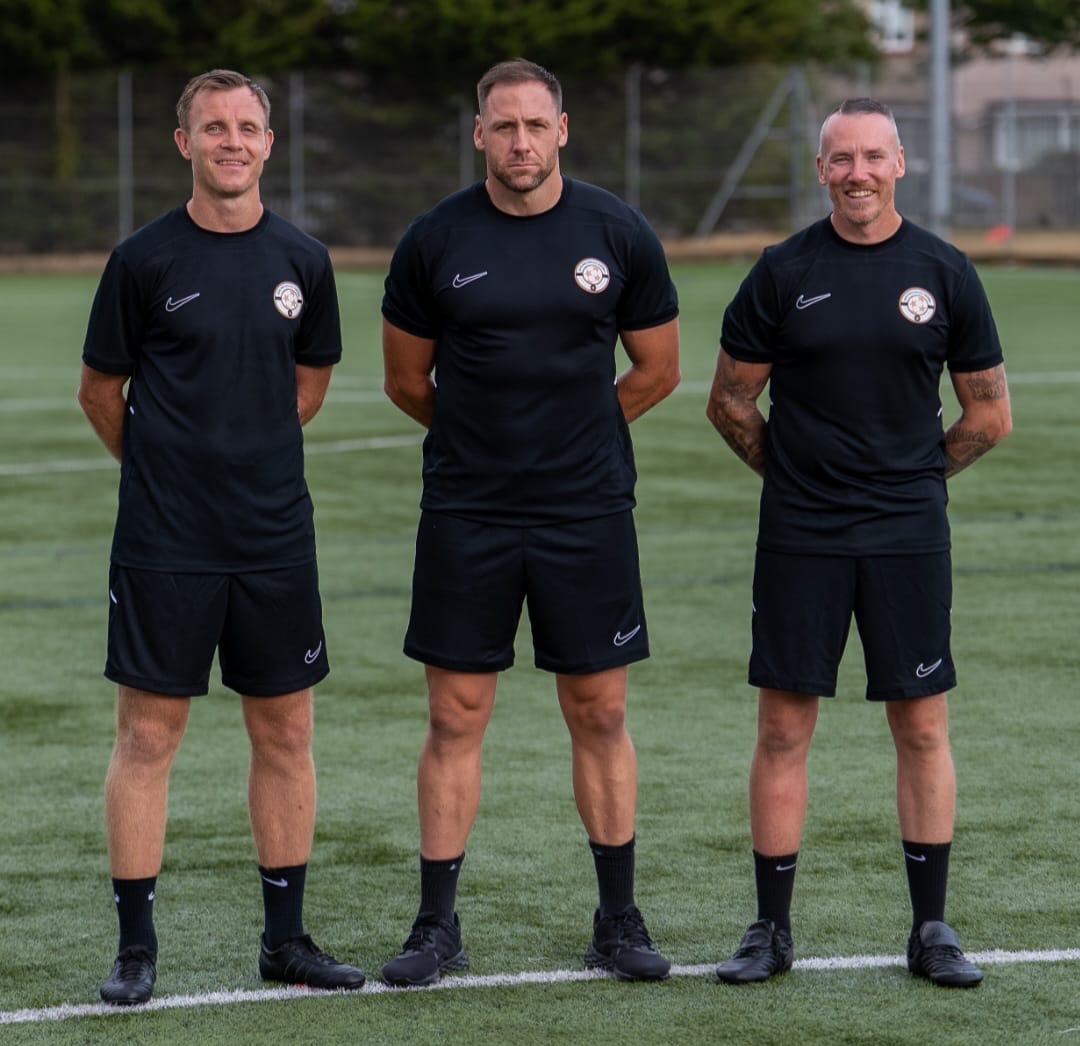
EPF Directors Alex Warner and Terry Hawkey have both spent more than 20 years working with young children through football, sport and physical development.
Across those years, we have watched countless children develop.
And one pattern appears regularly.
Imagine two children.
Child A
Starts structured sports coaching at two years old.
Child B
Starts at six years old.
By the time both children are six, Child A may have had four years of:
Running.
Kicking.
Turning.
Following instructions.
Playing games.
Balancing.
Handling a ball.
Interacting with coaches.
Training around other children.
Child B may be experiencing many of those things for the first time.
So, understandably:
Child A may look significantly more advanced.
Their movements may appear more natural.
Their ball control may be better.
They may understand session routines.
They may listen better.
They may appear far more confident.
Parents naturally look at that difference and think:
“My child is extremely talented.”
They might be.
But there is another explanation.
They may simply have had significantly more practice.
Four Years of Development Matters
If one child has trained for four years and another has trained for four weeks, we should expect there to be a difference.
That is one of the genuine benefits of starting early.
Your child has accumulated experience.
They have developed a movement vocabulary.
They understand coaching environments.
They have spent hundreds of hours moving, experimenting and learning.
That matters.
But here is the part parents sometimes find harder to hear:
Being ahead at six does not guarantee being ahead at ten.
Development does not work like that.
Why Early Success Does Not Guarantee Future Success
Children develop at very different rates.
Between the ages of six and sixteen, enormous changes can occur.
Physical Maturation
One child grows early.
Another grows late.
Someone who looked physically dominant at seven may no longer be physically dominant at twelve.
Another child may suddenly become faster, stronger or more coordinated.
Motivation
A child may love football at five and prefer athletics at ten.
Another may show little interest at four and become football-obsessed at eight.
Coaching
Different environments can accelerate or restrict development.
Opportunity
One child receives excellent coaching.
Another does not.
Then circumstances change.
Confidence
Confidence can transform performance.
It can also disappear.
Practice
The child who starts at six may become obsessed with practising and accumulate development extremely quickly.
Other Sports
A child might build valuable physical qualities through gymnastics, athletics, swimming, dance, rugby or martial arts that later transfer into another sport.
Growth
Rapid growth can temporarily affect coordination.
A child who previously looked exceptionally fluent may suddenly look awkward.
Psychology
Resilience, competitiveness, concentration and willingness to learn all develop differently.
That is why development must never be viewed as a straight line.
Research supports this caution.
Although fundamental movement skill competence and physical activity are positively associated in early childhood, long-term development is influenced by many interacting factors.
In simple terms:
Early development is valuable. It is not destiny.
The Danger of Labelling a Five-Year-Old “Elite”
This is something we feel strongly about.
At five or six years old, a child who has trained for three years can look extraordinary compared with a child who has just started.
That does not necessarily mean they possess extraordinary long-term potential.
It may mean they are simply further along the learning process right now.
That distinction matters.
If adults constantly tell a young child:
“You’re the best.”
“You’re going to be professional.”
“You’re different from everyone else.”
We can accidentally create pressure.
The child begins protecting the identity of being “the talented one.”
Mistakes become threatening.
Other children improving becomes threatening.
Sport becomes something they need to be good at rather than something they enjoy learning.
We would rather say:
“You’re doing really well. Keep learning.”
That encourages development rather than entitlement.
So Should We Avoid Recognising Talent?
No.
Some children clearly demonstrate advanced characteristics early.
They may possess exceptional:
Coordination.
Movement.
Understanding.
Confidence.
Speed.
Technical ability.
Interest.
We should absolutely challenge those children appropriately.
But there is a difference between recognising current ability and predicting a child’s future.
A good coach can say:
“This child is currently advanced for their age.”
That is very different from saying:
“This child will definitely become an elite player.”
At two, four, six or even eight years old, nobody can honestly guarantee that.
What Should a Good Toddler Sports Session Look Like?
Parents should look for an environment where children are active rather than waiting.
There should be plenty of:
Movement.
Games.
Imagination.
Equipment.
Simple challenges.
Ball interaction.
Running.
Jumping.
Balance.
Throwing.
Catching.
Kicking.
Exploration.

Sessions should be structured enough to provide learning but flexible enough to recognise that toddlers are toddlers.
Some days they will listen brilliantly.
Some days they will not.
Some children will participate immediately.
Some will watch.
Some will want Mum or Dad involved.
Some will become independent very quickly.
That variation is completely normal.
Should Toddler Sport Be Competitive?
Competition is not automatically bad.
Children naturally race.
They chase.
They try to score.
They enjoy winning games.
The issue is how adults frame it.
At this age, competition should remain playful.
A three-year-old does not need a league table.
They do not need a performance review.
They do not need their parent analysing the session on the car journey home.
They need opportunities to:
Try.
Fail.
Laugh.
Try again.
And gradually improve.
What If My Child Does Not Join In?
Do not panic.
We have seen this countless times.
Some children spend their first session watching.
Parents often become embarrassed and start saying:
“Go on!”
“You’re being silly.”
“Everyone else is doing it.”
Usually, pressure makes things worse.
Watching is part of learning.
The child may be trying to understand:
Who is this coach?
What happens here?
Are Mum and Dad staying?
What are those children doing?
Is this safe?
Give them time.
A quality coach should recognise this and gradually invite rather than force participation.
What If Another Child Is Much Better Than Mine?
At three years old?
It genuinely does not matter.
They may have:
Started earlier.
Older siblings.
More garden space.
Parents who play sport.
Better coordination currently.
More confidence.
Different physical development.
More previous group experience.
None of those things tells us definitively where either child will be in ten years.
Compare your child with their previous self, not the child standing next to them.
Can they now do something they could not do three months ago?
That is progress.
Should My Child Specialise in Football at Two?
No.
Even if football is the activity they enjoy most.
Young children benefit from broad movement experiences.
Football is excellent for:
Running.
Kicking.
Acceleration.
Balance.
Changing direction.
Spatial awareness.
But other activities provide different challenges.
Swimming.
Gymnastics.
Athletics.
Dance.
Cycling.
Climbing.
Throwing games.
Racket sports.
Playgrounds.
All can contribute to developing a broad physical foundation.
At EPF, our ambition is not to create specialist three-year-old footballers.
We want to help create confident young movers who love having a football at their feet.
Alex Warner’s Experience: Starting With Enjoyment
EPF Director Alex Warner has spent more than two decades coaching young players.
Through AW Football Coaching, Alex developed extensive experience in toddler football and introducing very young children to the game.
One of the biggest lessons from those years is simple:
You have to meet children where they are.
You cannot coach a three-year-old like a seven-year-old.
And you cannot coach a seven-year-old like a fourteen-year-old.
The session must match the child’s stage of development.
For toddlers, success can be:
Entering the session without holding a parent’s hand.
Kicking a moving football.
Completing a jumping activity.
Remembering a coach’s name.
Taking turns.
Scoring a goal.
Helping another child.
Or simply finishing the session saying:
“Can I come again?”
Those moments create foundations.
Terry Hawkey’s Experience: Develop the Athlete Before Chasing Performance
EPF Director Terry Hawkey has also worked with young children for more than two decades through football, sport and physical development.
His background in athletics, coaching and strength and conditioning reinforces another important principle within our programme:
Physical literacy develops progressively.
Before worrying about how fast a child can sprint or how powerful they are, we want them comfortable performing a huge variety of movements.
Running.
Landing.
Balancing.
Changing direction.
Throwing.
Catching.
Jumping.
Moving at different speeds.
Responding to visual and verbal information.
Those foundations provide options later.
If a child eventually chooses football, athletics, rugby, tennis, boxing or something completely different, movement competence remains valuable.
We do not know which sport a two-year-old will eventually choose.
So our job is to give them foundations rather than restrict their future.
Why We Offer Toddler Sport at EPF
Our toddler programme sits at the beginning of the wider EPF Player Development Pathway.
But we want parents to understand what that means.
It does not mean:
Toddler → Academy → Professional Footballer.
Development does not operate like a conveyor belt.
Our pathway simply allows us to provide development opportunities appropriate to different stages.
For the toddler, that means:
Fun.
Movement.
Coordination.
Confidence.
The football.
Social interaction.
A positive coaching environment.
As children grow, the programme grows with them.
Technical demands increase.
Football problems become more complex.
Decision-making becomes increasingly important.
Physical development evolves.
But the foundation remains the same:
Love moving. Love learning. Love playing.
What Is the Real Benefit of Starting at Two?
Perhaps the best way of answering is this:
Starting at two gives your child more experiences, not a guaranteed future advantage.
By six, they may have accumulated four years of movement, coaching, play and football experience.
That absolutely has value.
It may make them more confident and more competent than someone starting for the first time.
But from six onwards, both children continue developing.
And development rates change.
The child who started at six may catch up.
They may overtake.
Your child may accelerate further.
They may choose another sport.
Nobody knows.
So use early sport for what it genuinely offers:
A head start in experience.
Not:
A guarantee of future performance.
That distinction protects children and keeps parents focused on what really matters.
What Should Parents Measure?
Do not measure your toddler by goals.
Do not measure them against another four-year-old.
Look for:
Are they enjoying it?
Are they becoming more confident?
Are they moving more freely?
Are they learning new skills?
Are they interacting with others?
Are they becoming more independent?
Can they follow slightly more complex instructions?
Do they want to practise?
Are they excited to return?
If the answer to those questions is yes:
Something valuable is happening.
The EPF View
At Elite ProFormance Football, we want ambitious players.
We want to challenge talent.
And as players grow, our environments become progressively more demanding.
But at two, three and four years old, we believe the priority should be clear.
Build the child before worrying about building the athlete.
Give them movement.
Give them confidence.
Give them challenges.
Give them friends.
Give them a football.
Give them excellent coaches.
And give them reasons to keep coming back.
Starting early can provide a fantastic foundation.
But childhood sport is not a race.
Some children start at two.
Some start at six.
Some develop early.
Some develop late.
Some will love football.
Others will eventually find their passion somewhere else.
Our responsibility is not to predict the destination.
It is to make the beginning as positive as possible.
Elite ProFormance Football
First Steps. Strong Foundations. Lifelong Development.
Useful Resources for Parents
UK Chief Medical Officers — Physical Activity Guidelines
Official UK guidance on how much physical activity young children should receive and the benefits of being active.
Physical Activity for Early Years — Birth to Five
A parent-friendly summary covering movement recommendations and examples including jumping, climbing, throwing, catching, walking and active play.
World Health Organization — Guidelines for Children Under Five
WHO guidance covering physical activity, sedentary behaviour and sleep during early childhood.
Research — Fundamental Movement Skills and Physical Activity
A systematic review examining the relationship between fundamental movement skills and physical activity in young children.



Comments